
Murderthon Killer / Mask Guide
Macro pressure, chase discipline, chair control, and new Mask mechanics.
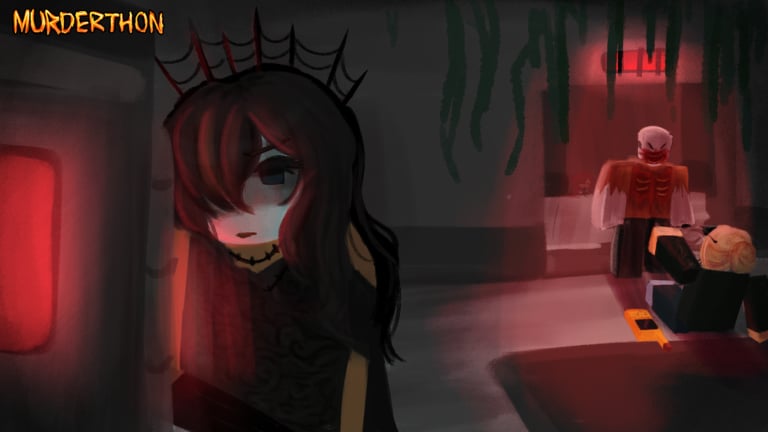
Playing Mask in Murderthon is a macro job first and a chase job second. Four survivors repair five generators while you create downs, defend electric chairs, and decide when a tunnel is worth the map. This guide covers pressure paths, gen kicking, info reading, chair defense, tunneling rules, Killer Lunge mechanics, Deep Wound status, and how different Mask kits change those rules. Pair it with the masks roster and the masks tier list when you pick a main.
New to the game entirely? Start with getting started so win conditions and controls are clear.
New Mask mechanics
Killer Lunge
Masks now have a lunge attack with increased reach. This is a significant change to chase dynamics:
- Lunge extends attack range beyond normal M1
- Missing an attack causes 60% slowness for 3 seconds (increased from 50% for 2s)
- Mask swinging with no hit or hitting a wall is now slowed more
- Lunging through pallets to catch survivors who vault is now viable
Use the lunge to catch survivors who think they’re safe behind a pallet. However, whiffing is heavily punished—make sure you have a clear line before lunging.
Deep Wound
Deep Wound is a status effect that applies a bleed-out timer to survivors:
- The timer depletes when the survivor is not mending
- Timer pauses while sprinting
- Timer depletes when not actively mending
- If fully depleted, the survivor goes into dying state
- Survivors must stop and mend to remove Deep Wound
This creates interesting pressure opportunities: apply Deep Wound, then chase another survivor while the first is forced to stop and mend. You can apply Deep Wound through certain Mask abilities and talents.
Bloodlust
Bloodlust is a tiered status effect to help catch survivors who evade for prolonged periods:
- 4% speed boost per tier (decreased from 5%)
- Bloodlust lingers for 2 seconds after breaking chase (decreased from 3s)
- Lost if you break a pallet, successfully hit any survivor, or use your ability
Bloodlust rewards patience in long chases. If a survivor gets a 20-second head start, Bloodlust will close the gap over time. However, breaking pallets resets Bloodlust—choose pallet breaks carefully.
Interrupt/Catch mechanic
You can now interrupt survivor actions during vents, lockers, and pallet vaults by hitting M1 at the right timing:
- Vent catches: Only work if survivor is injured and does not do slide
- Pallet vault catches: Only work if survivor is injured
- Locker catches: Work whenever (hit at right timing)
This rewards prediction over reaction. If you see an injured survivor heading toward a vent, pre-position for the catch.
The Mask win condition
You win by eliminating the survivor team before they power exits. Practically that means:
- Find first contact without letting three gens slam.
- Convert pressure into downs (two-hit standard: healthy → injured → downed, or apply Vulnerable for instant down).
- Chair efficiently and leave when the save is not free.
- Reappear on the highest-progress generators.
- Close the game with tunnels, hatch denial, or gate holds.
Every flashy chase that lasts a minute while gens pop is a disguised loss. Bloodlust helps long chases, but it does not repair your macro.
Opening patrol
Spawn, identify gen clusters, and walk a route that tags the edges of multiple repair zones. Do not camp the first gen you see unless a survivor is already committed mid-progress. Early game goals:
- Collect free information: scratch marks, missed skill-check screams, chest opens, vent audio.
- Force at least one injury before the second gen completes.
- Place setup resources (Fate traps, Divide lingering, Lens devices) on common transitions, not random corners.
If you play a stealth Mask (Ripe, Jammed), your opening can be quieter—suppress terror radius, collect a hit, vanish, and reappear on a different gen. If you play a pressure Mask (Sin, Pierce, Sheol), your opening is louder: show presence, kick, and make survivors leave early.
Gen pressure and kicking
Kicking a generator reduces progress more now (15% instead of 10%). A kick that costs you a guaranteed down is usually wrong; a kick on an 80% gen while survivors reset is usually right. Pierce players get to rewrite this rule because teleport to incomplete gens and block them briefly—use that to punish solo repair islands.
Think in threat triangles: after a chair, the three nearest unfinished gens are your next path. If two are red-hot, hit the hotter one first even if the third is closer. Survivors win when you patrol emotionally instead of mathematically.
When to tunnel
Tunneling (refusing to leave one survivor) is a tool, not a personality.
Tunnel when:
- The unhook happens under your nose and the team is stacked for a trade.
- The survivor is on final shock risk and gates are not instant.
- A gen will complete during a polite patrol and you need a stop-gap down.
- The player’s class is the team’s only Handyman or Medic and deleting them collapses resources.
Do not tunnel when:
- Three other survivors are free on separate high gens.
- You just chaired someone and no one is nearby—proxy instead.
- You are playing into a Saboteur chair sabotage with three people hovering.
- You are tilted. Tilt tunnels lose more alpha games than any Mask kit.
After a productive tunnel, immediately reset to gen kicks. The point of the tunnel was tempo, not a highlight clip.
Chair defense without face-camping
Electric chairs are your conversion machine. Face-camping (staring at the chair) teaches survivors to slam gens. Prefer:
- Proxy defense — Leave to the nearest jungle gym or gen, stay in terror-radius range, return on save animation audio.
- Zone denial — Fate traps and Divide vent seals on the save path.
- Info punish — Sheol’s Book of Death style pressure that forces movement after chairs; Jammed cuffs that freeze the unhooker.
- Late camp — When four gens are done or the last two survivors are both injured, camping becomes correct.
Anti-camp improvements exist for chairs: survivors near you will see an anti-camp bar warning. Use this information to avoid obvious camping patterns.
Reading information
Murderthon leaks more info than beginners use.
- Terror radius — You broadcast unless Undetectable. Use that fear to push survivors off gens even when you are not committing.
- Scratch marks — Sprint trails. Injured blood pools add a second layer. Blood pools now spawn every 2 seconds when injured or downed (stay for 15 seconds).
- Skill checks — Missed checks are GPS pings. Good survivors rarely miss; greedy Mechanics sometimes do.
- Vault/vent audio — Tells you whether the chase is still on your tile.
- Comm wheel habits — Stacked pings often mean a coordinated save. Rotate early.
- Door audio — Frost’s doorway system ticks when resetting pass counts.
Stealth Masks invert the game: you deny info. Ripe’s Undetectable after hits and Madness hallucinations create false pressure—capitalise by leaving the maddened target to hit the healer who walks over.
Chase fundamentals for Masks
Survivors will try the patterns in the looping guide. Your answers:
- Respect standing pallets until you have a reason not to (Sin rush breaks, Sheol card breaks with talents, Bloodlust already winning).
- Cut vault angles instead of mirroring the exact survivor path.
- Anticipate slides on vent corridors; pre-aim the exit.
- Drop chase at forty-five seconds if no injury landed and two gens are screaming—repatrol.
- Use abilities to end chases, not to start ego plays in open space.
- Use lunge to catch survivors vaulting pallets, but respect the 3-second miss penalty.
Two-hit downs mean every mind game matters. A single forced vault mistake is a health state; a health state plus a bad transition is a chair.
Kit-specific macro notes
Fate
Trap transitions between strong tiles and gen approaches. Cooldown reduced to 15s. Frenzy turns trap procs into map mobility. You are a set-play Mask—absent from some chases on purpose.
Ripe
Beginner-friendly stealth. Spit Madness to interrupt repairs, corrode awkward pallets, then Stealthy Kid Undetectable to relocate. Now has 3 hallucination clones. Do not tunnel the maddened survivor if a healthier gen cluster is free.
Sin
Snowball rushes. Hold Mi Dolor for confirmed lines, not fifty-fifty open field swings. Missed rushes stun you for 2.3 seconds—survivors will bait that. Great for deleting Handyman tiles quickly. Ability now breaks pallets.
Pierce
Gen teleport controller. Your win condition is stalling the repair economy, not winning every loop. Teleport is now much faster (2.65s instead of 4.59s). Chair into perk blocks to freeze the map.
Sheol
Ranged cards force movement and can deep-wound. Range increased to 150 studs. Aim, manage card economy, and use post-chair movement pressure. Weak ping hurts—pick another Mask if your connection is unstable.
Jammed
Cuffs stall the team’s interactions and buy Undetectable windows. Cuff is now a swing (M1 to cuff). Cuffed survivors near 75 studs are highlighted. You are a tempo Mask: cuff, relocate, hit the people trying to uncuff.
Divide
Own the vents. Isolate cooldown decreased to 20s, Lingering to 40s. Going through a Lingering’d vent now gives you speed boost. Force survivors into M1-friendly tiles.
Lens
Info and trap-teleport hybrid. Play for aura knowledge and punish locker / obliviousness patterns. Wire-Frame survivors to track them, then Glass Cannon teleport to catch.
Plague (live)
Listed as infection / area-denial. Do not build muscle memory around kits that are not live in your build. Re-test after patches.
Endgame: gates and hatch
When the fifth gen completes, stop thinking about fair chases. Injure freely, guard the more popular gate, and deny hatch when only one survivor remains. If two survivors are up, force a down before they double-gate. If one is up, patrol hatch spawns using the last known positions. Hatch only spawns when 1 survivor remains.
Practice routine
- Ten matches where you never face-camp—proxy only.
- Ten matches where you drop any chase without a hit after forty seconds.
- Main one Mask for a week; learn its patrol rhythm before switching.
- Review losses: which gen completed while you ego-chased?
Related pages
- Masks roster for kit details
- Masks tier list for alpha rankings
- Looping guide to understand survivor pathing
- Getting started for shared basics
- Classes so you know which gadgets punish your plan
Mask play in Murderthon rewards cold gen math and flexible tunnels. Learn to leave chairs, kick the right objectives, and spend abilities on real conversions—then the chase tech becomes icing instead of a trap.
Frequently Asked Questions
Quick answers for Murderthon survivors and Masks.
Should I camp the electric chair as Mask?
Rarely in the early or mid game. Proxy from a nearby tile, deny the save path with traps or vent seals, and only hard-camp when gates are imminent or the last survivors are already pressured.
When is tunneling correct in Murderthon?
Tunnel on death-hook pressure, stacked unhooks in your face, or when deleting a key class collapses the team's resources. Avoid tunneling while three other survivors slam separate high-progress gens.
What is the Killer Lunge?
A lunge attack with increased reach. Missing causes 60% slowness for 3 seconds. Use it to catch survivors vaulting pallets, but respect the heavy miss penalty.
How does Deep Wound work?
Deep Wound applies a bleed-out timer. The survivor must stop and mend to remove it. Timer pauses while sprinting, depletes when not mending. If fully depleted, survivor goes into dying state.
How do I stop generators from flying?
Patrol clusters, kick high progress when safe (15% reduction now), and end dead-end chases early. Pierce can teleport to incomplete gens; other Masks must walk smarter routes instead of ego-looping empty tiles.
What information should I track every chase?
Scratch marks, blood pools (every 2 seconds when injured), vault and vent audio, missed skill checks, and which teammates ping saves. Stealth Masks should also track when their Undetectable windows end.